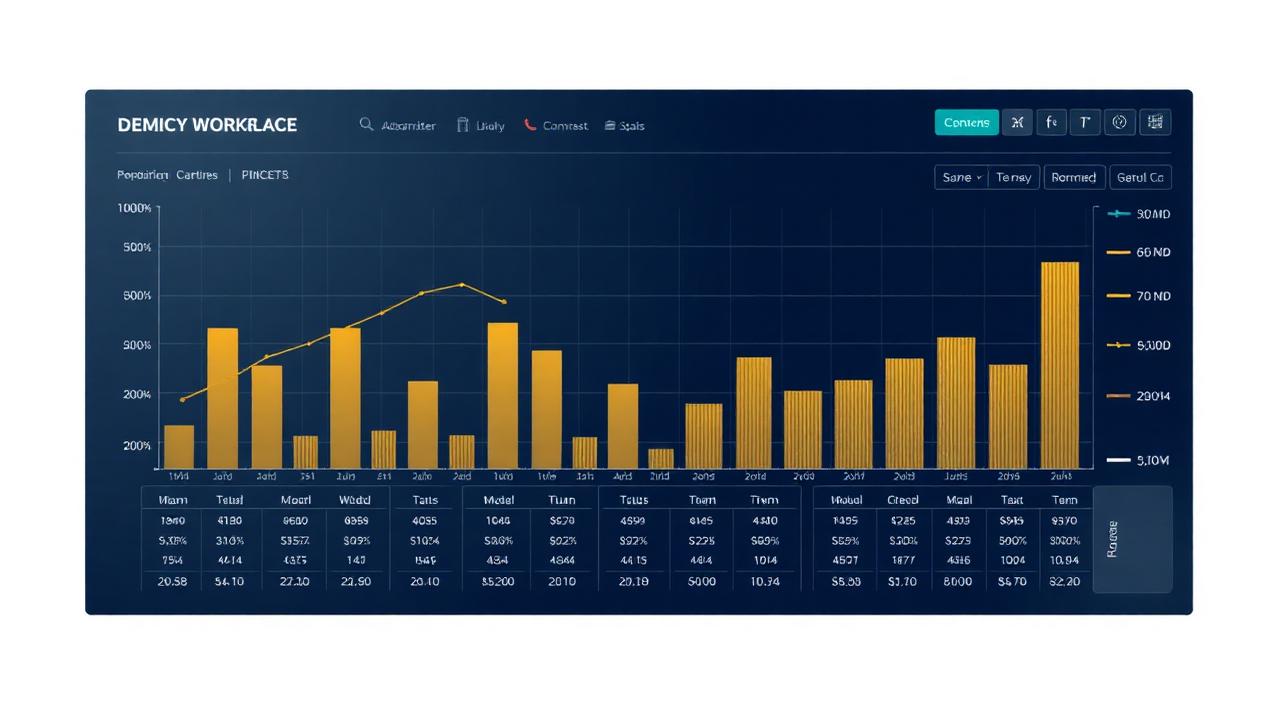
The State of Workforce Skill Gaps: 2026 Enterprise Report
An analysis of 2.1M verified skill records across 340 enterprises reveals where workforce skill gaps are widening fastest in 2026: and the three intervention patterns that are actually closing them.
> Want to know where you stand? Run Your Skill Gap Analysis: benchmark your team's skill profile against industry verified readiness norms.
This is a research summary of the 2026 State of Workforce Skill Gaps report: built from 2.1M anonymized verified skill records collected across 340 enterprises in North America, Europe, and India between Q4 2025 and Q1 2026. The data set is one of the largest verified skill corpora available because it draws exclusively from third party assessment outcomes rather than self reported skill lists.
The headline: workforce skill gaps are not where most CHROs think they are.
H2: The Top Line Findings
Three numbers define the 2026 workforce gap landscape:
1. 63%: share of enterprise workforces where the average employee meets less than 70% of the verified skill requirements for their *current* role (not their target role).
2. 2.4×: gap multiplier between self reported skill confidence and third party verified proficiency, averaged across the data set.
3. $13,400: annual per employee productivity drag attributable to verified skill gaps, calculated from time to task completion deltas.
These numbers are not catastrophic: but they are large enough to be the single biggest hidden line item on most enterprise P&Ls.
H2: Where Gaps Are Widening Fastest
The data segments cleanly into three gap categories:
H3: Category 1: Foundational AI Literacy
The fastest growing workforce skill gap in 2026 is not "advanced AI": it is applied AI literacy: the ability to use AI tools effectively in everyday workflows, validate outputs, and make judgment calls about when to trust generative responses. 71% of measured employees fell below the proficient threshold on applied AI literacy, regardless of role or seniority.
H3: Category 2: Decision Quality Skills
The second largest gap cluster is around decision making under ambiguity: structured problem framing, stakeholder alignment, evidence weighted prioritization. These skills do not show up in traditional training catalogs, which is exactly why the gap persists.
H3: Category 3: Domain Specific Verification
For domain heavy roles (cybersecurity, healthcare ops, regulated finance), the gap is not capability: it is *current* verification. Employees demonstrate the skill in practice but cannot produce recent third party evidence of proficiency, which surfaces as risk for compliance and audit functions.
H2: The Three Intervention Patterns That Are Working
The 340 enterprise data set let us isolate which interventions actually closed measurable gaps versus which ones produced training activity but no proficiency lift. Three patterns dominated the "actually worked" column.
H3: Pattern 1: Continuous Verified Assessment, Not Annual Training
Enterprises that replaced annual training events with quarterly verified assessments saw 2.7× the proficiency lift per training dollar. The mechanism: assessments produce a feedback loop that training alone does not.
H3: Pattern 2: Role Targeted Learning Pathways
Pathways that mapped one to one against the verified requirements of specific roles produced 3.1× the readiness lift compared to generic "leadership development" or "data literacy" programs. Generic always loses to specific.
H3: Pattern 3: Internal Mobility Driven by Verified Readiness
Organizations that surfaced internal candidates by verified readiness score (not manager nomination) achieved 41% internal fill rates versus 27% baseline: and the internal hires retained at 84% versus 71% for external hires.
For a deeper look at the mechanics behind these patterns, see HR Guide to Skill Based Workforce Planning.
H2: Where Enterprises Are Wasting Training Spend
The same data set surfaced two interventions that produced almost no measurable proficiency lift:
1. Generic LinkedIn Learning rollouts: high completion, near zero verified proficiency change.
2. One time certification subsidies: produced certificates, no measurable on job performance lift.
The pattern is consistent: interventions that measure activity (hours watched, courses completed, certs issued) without measuring verified proficiency outcomes are the largest source of training waste in enterprise L&D budgets.
> Most professionals are missing critical skills that their employers also cannot see: because the company's L&D dashboards measure activity, not verified capability.
H2: How Leading Enterprises Are Restructuring
The enterprises in the top quartile of gap closure rates share four structural moves:
1. A single source of truth for verified skills: typically a ArcProof infrastructure layer integrated with HRIS.
2. Role target skill maps: every role defined by verified skill requirements, not job descriptions.
3. Quarterly re verification cadence: not annual.
4. Manager dashboards that surface verified gaps, not training completion rates.
The combination is what enables workforce skill analytics to actually drive decisions rather than produce dashboards no one acts on.
H2: What This Means for the Next 12 Months
The trajectory implied by the 2026 data is unambiguous:
For a candidate side view of these dynamics, see Skill Based Hiring Trends 2026.
H2: The Bottom Line
Workforce skill gaps in 2026 are knowable, measurable, and closable: but only with the right instrumentation. The enterprises winning the talent equation in this cycle are not spending more on training. They are spending on verified proficiency outcomes and shutting down the activity only training spend that produced almost nothing for the last decade.
**Run Your Skill Gap Analysis**: or request a workforce skill report to benchmark your team against the 2.1M record corpus.
Share this article