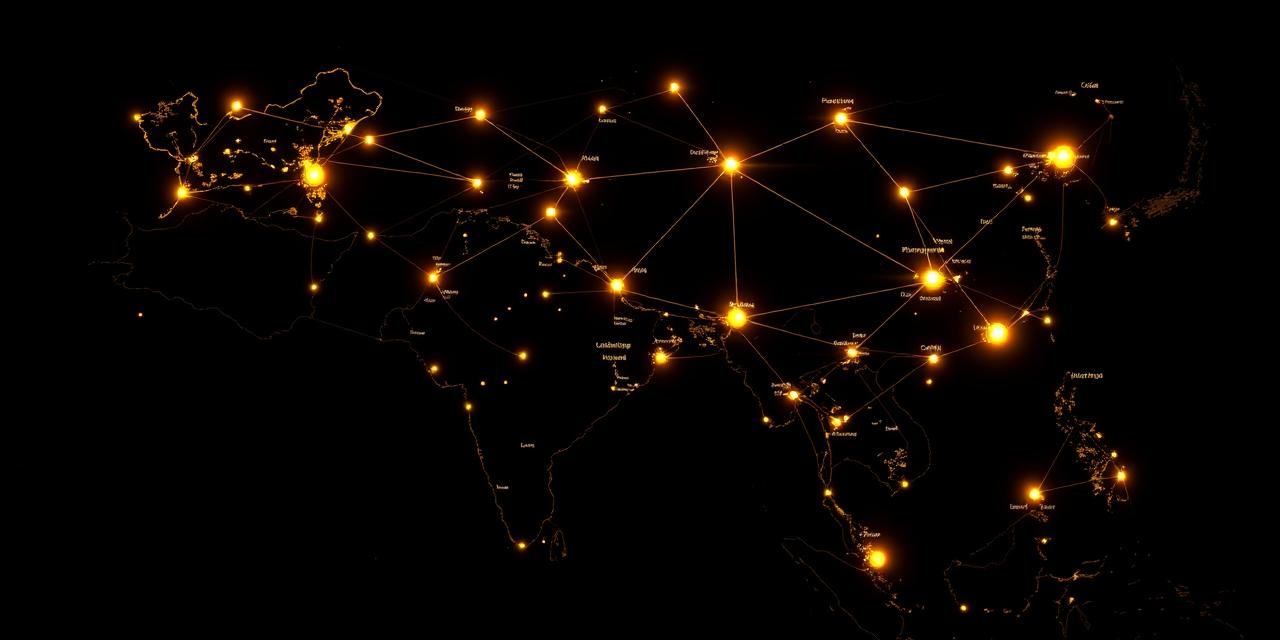
Skills Based Hiring in Asia: What China, India, and Singapore Signal for Your Career
China cut 12,000 degree programs. India is rewriting education under NEP 2020. Singapore has been issuing skill based credentials for a decade. Three signals, one direction: and a practical playbook for your career.
If you want to see where global hiring is heading, watch Asia. Three of the largest education and labor systems in the world: China, India, and Singapore: are restructuring their credentials at the same time and in the same direction. The specifics differ. The signal is identical: AI driven skill verification
Here is what each country is actually doing, what it means for the global hiring market, and the practical playbook for your career.
China: a teardown of 12,000 degree programs
The headline number is the loudest one in modern higher education. Between 2021 and 2025, China's Ministry of Education revoked or suspended 12,200 undergraduate programs and approved 10,200 new ones, primarily in AI systems, robotics engineering, semiconductor design, and embodied intelligence. More than 30% of program inventory was touched.
The driver: roughly 12.7 million graduates entering the 2026 job market, with youth unemployment above 16%. The Ministry's logic, stripped to its essence, is that the degree as a hiring signal has stopped tracking the work the economy actually pays for: so the catalog gets retooled like a production line. We unpacked the full implications in China Just Cut 12,000 Degrees. Here's What It Means for Your Career.
The signal for the rest of the world: if the largest higher education system on the planet is willing to scrap a third of its programs to chase actual labor market demand, no Western university catalog is safe from the same pressure.
India: NEP 2020 and the skills first re platforming
India's reform is quieter but structurally just as deep. Under NEP 2020 (the National Education Policy 2020), the country is moving its entire education stack toward outcomes measured by *skills delivered*, not degrees awarded. The rollout includes:
For a country graduating millions of students per year into a hiring market that increasingly hires globally, the implication is the same as China's: the degree is becoming a starting point, and what determines actual employability is the verifiable, modular skill stack built on top of it.
Run your free AI readiness scan →
Singapore: the model the others are catching up to
Singapore has been running this experiment longer than anyone. SkillsFuture, the country's national credentialing program, has spent close to a decade treating skills as the unit of account: funded, modular, continuously verified, and stackable across a career. Singaporean employers are already comfortable hiring against skill credentials rather than degrees, and the local talent market has reorganized around that comfort.
Singapore is essentially the working prototype that China's catalog reset and India's NEP rollout are converging toward. Where Singapore goes first, the rest of Asia follows within a few years.
What this signals for global hiring
Three regions, three policy mechanisms, one direction. The combined effect on global hiring over the next 24 months is straightforward:
If you work in an organization that hires regionally or globally, your candidate pool is already changing under you whether or not your hiring stack reflects it.
The practical playbook for your career
You do not need to relocate to Asia to benefit from what Asia is signaling. The same verification infrastructure is available globally, and the smart move is to adopt it before your local market forces you to.
1. Stop treating your degree as the proof.
Treat it as the starting point. The proof is what you can verify on top of it.
2. Build a verified skill stack in the layers Asia is investing in.
AI fluency, applied data work, judgment under uncertainty, integration of AI into existing workflows. These are the layers China, India, and Singapore are all simultaneously moving toward.
One public URL, one click verifiable, that travels with you across employers and geographies. This is the credential format Asia's policy reforms are converging on, and the one a recruiter anywhere in the world can read in seconds.
4. Re verify every 12 to 18 months.
Skill half life is shrinking. A credential that was current in 2024 may not be current in 2026. Continuous verification is the new continuous education.
The bottom line
China's teardown of 12,000 degrees, India's NEP rollout, and Singapore's mature SkillsFuture program are not three local stories. They are one global story told three times. The degree, as a *standalone* trust signal, is being retired. What replaces it is a stack of independently verified skills that an employer can read in one click and trust like a reference check.
Career advantage in the next 24 months goes to the professionals who notice the signal early and start issuing themselves verifiable credentials before their local hiring market makes it mandatory.
Get my free AI readiness scan →
Related reading
---
Author: Maduabuchi Eze Nwankwo, Talent Strategy Analyst at ArcProof
Published: June 2026
Tags: AI for skill verification, skills based hiring Asia, China degree reform, India NEP 2020, Singapore SkillsFuture
Share this article